You have booked the session, paid the deposit and picked the date. Then comes the quiet worry that turns up about a week beforehand: what will we actually be doing for that hour? Will somebody tell us to stand in a line and smile? Is there a wrong way to do this?
There is not, and most of the nerves disappear inside the first ten minutes. Knowing the shape of a session still makes it easier to enjoy, so here is what an hour in a studio usually looks like from the inside.
Before you arrive
A good photo studio will ask a few questions before the day: who is coming, what the photos are for, and whether anyone is nervous about being in front of a camera. Answer honestly. A session planned for a large print in the living room gets framed differently from one headed for a Christmas card.
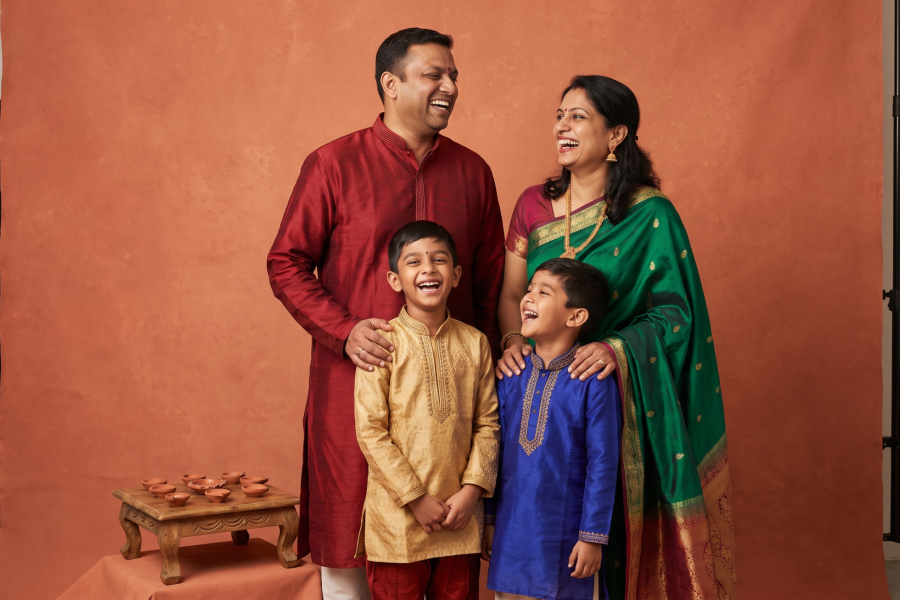
Outfits are the other piece of homework. Lay everything out the night before and look at it as one set in daylight if you can:
- Mid-tone solid colours photograph most reliably across a group
- Small busy patterns can shimmer oddly on camera
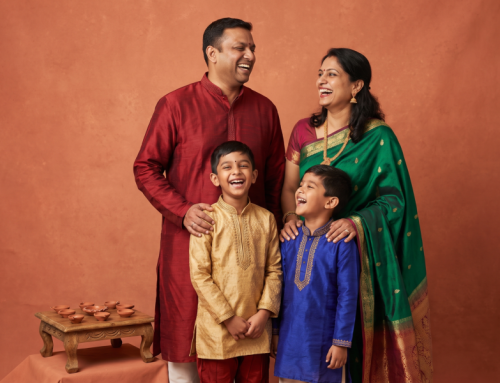
- Everyone needs to be able to sit on the floor in what they are wearing
- Pack a spare top for whoever spills something on the way
- Hang the second outfit instead of folding it into a tote bag
- Take off lanyards, event wristbands and anything carrying a printed logo
The first ten minutes
Arrive five or ten minutes early if the traffic allows. You will usually be shown where to put your bags, offered water, and given a moment to look at the backdrop and the lights before anybody picks up a camera. This part is not padding. People relax once a room stops being unfamiliar, and children in particular need to touch a light stand before they believe it is real.
The lights
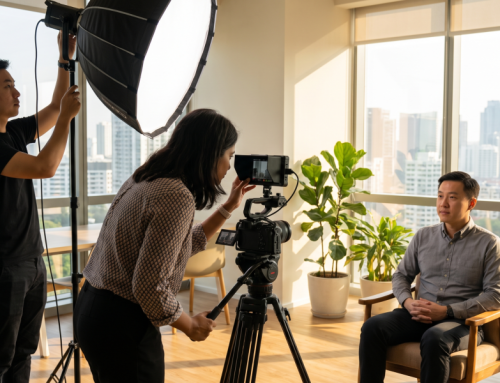
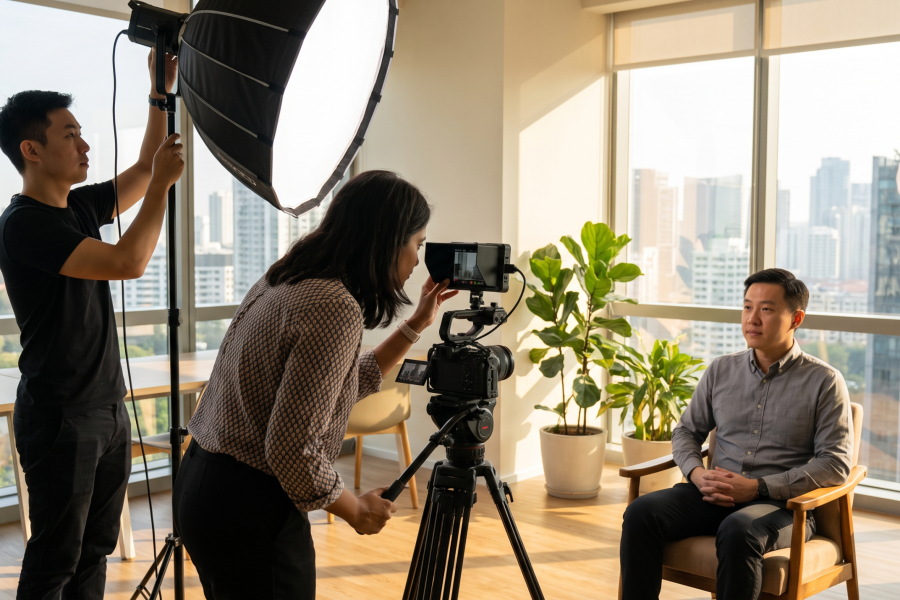
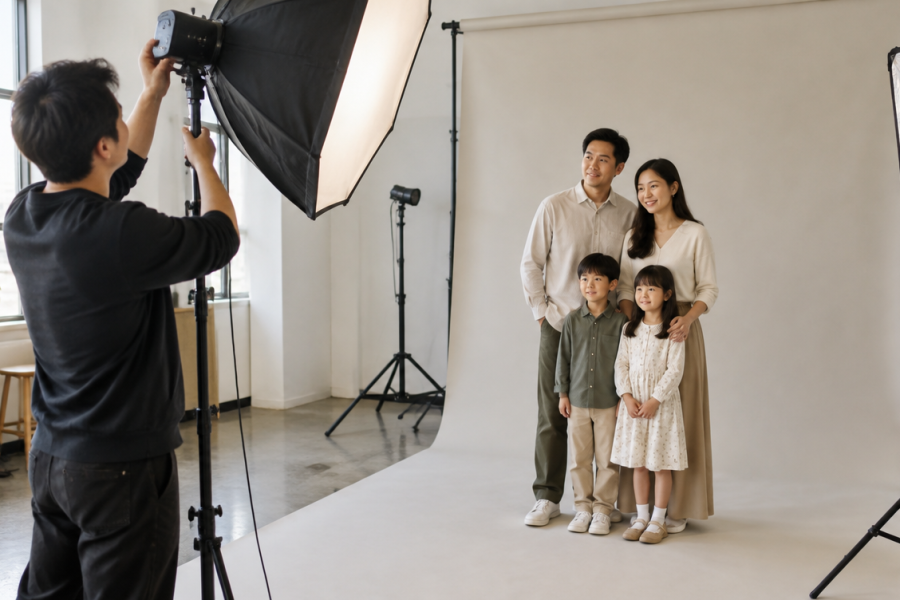
The big white box on a stand is a softbox, a fabric housing that spreads light out so it wraps around a face instead of hitting it straight on. That is why studio portraits look gentler than a photo taken with a phone flash in a dim room.
You will often see a reflector as well, usually a white or silver disc held low down, bouncing a little light back up to lift the shadows under eyes and chins. Neither tool asks anything of you beyond staying roughly where you were put.
The lights get adjusted several times during a session, and your photographer will take test frames of an empty backdrop or of one brave volunteer. That is a normal part of the hour and not a sign that something has gone wrong.
How the posing works
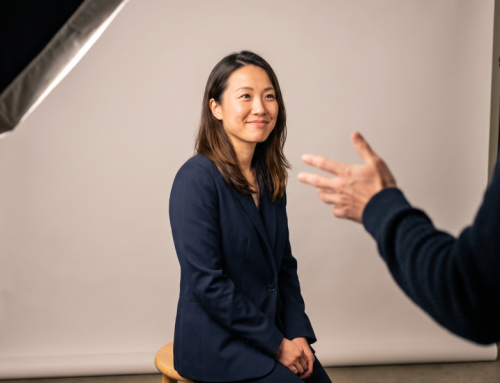
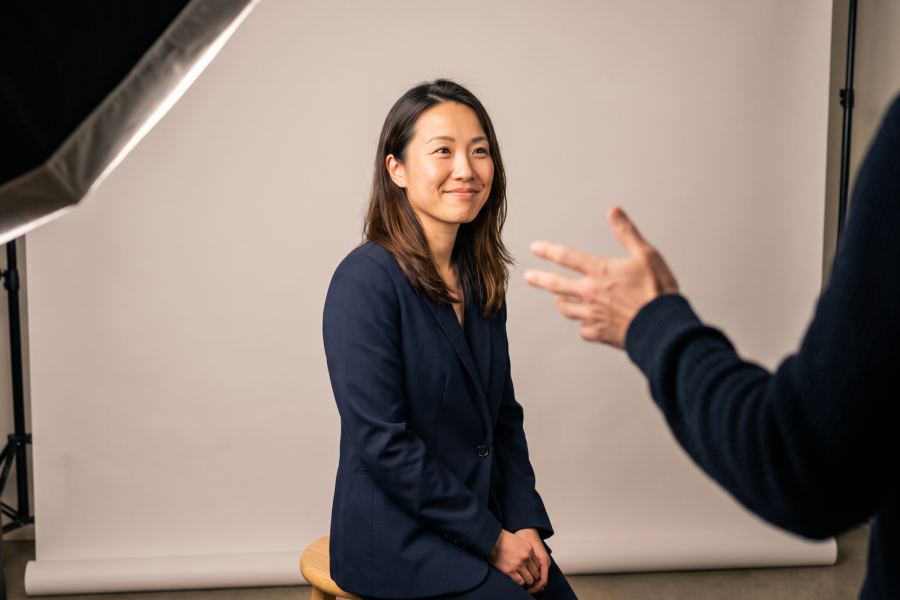
Nobody will leave you to work out angles on your own. Expect to be given positions: where to put your hands, which shoulder to turn, who stands where in a group. Pose guidance comes as standard in our Glow packages, and it covers the bit almost everyone dreads.
The pictures people end up loving are rarely the perfectly posed ones. They come from the second afterwards, when somebody laughs at the instruction or a child escapes the frame and has to be retrieved. A photographer keeps shooting through those moments on purpose.
When there are children in the room
Small children have roughly twenty good minutes in them, and they tend to spend the first five deciding whether they are interested at all. Photograph them early, let them run between sets, and treat whatever comes after as a bonus. A snack afterwards works better as an incentive than one during, which mostly leaves crumbs on a nice dress.
Outfit changes and the clock
A one-hour slot usually allows one change, perhaps two if the group is small and everyone is quick. Changing six people takes twenty minutes and leaves you forty, so be realistic about the trade.
Decide the order before you start. Photographing the full group first and the children second means the little ones can get out of the stiff clothes early and stay cheerful for what is left of the hour.
After the shutter stops
The session ends and the slower half of the job begins. Images are culled, then edited for colour, exposure and contrast, which at our studio is done in-house in Adobe Lightroom and Photoshop.
Turnaround depends on the package, the size of the group and how many finished images are included, so ask for an indicative timeline when you book. Photos are delivered digitally through a private online gallery or a secure download link, and prints or canvases are usually ordered separately once you have picked your favourites.
If you are booking in November or December, give yourself a buffer. The year-end school holidays run from 21 November to 31 December 2026, which makes weekend slots the first to disappear, and anyone hoping to post a card before Christmas should count backwards from the date they want it to land.
Why so many year-end sessions happen indoors
Studio bookings climb at this time of year for an unglamorous reason: rain. The indoor vs outdoor photoshoot question is largely a weather question between November and January, when afternoon showers are common and an outdoor session can be lost an hour before it starts. A studio runs to schedule whatever the sky is doing, which is a real comfort when six people have taken a morning off work to be there.
Conclusion
An hour goes quickly, and almost nobody leaves wishing they had been more nervous about it. Firefly Photography has been working with families, graduates and teams from our Yishun studio since 2012, and we will walk you through the session before you arrive so nothing feels like a surprise. Get in touch with your preferred dates and we will help you plan a session that suits the people coming.