September is when the year-end calendar stops being theoretical. Someone books the ballroom, someone else starts a spreadsheet of award categories, and roughly two meetings in, a director says the words “and maybe a short video”.
That sentence has buried more than one marketing executive. Five minutes of film looks small next to a four-hour dinner, and it quietly carries more decisions than the dinner does.
Decide What The Video Is Actually For
Before anything else, settle whether this is a film that plays in the room or a film that lives afterwards. A montage opening the dinner has one job, which is getting four hundred chatting people to look up. A culture or recruitment piece sitting on your careers page has a completely different one, and a single cut trying to serve both audiences usually satisfies neither.
| Plays in the room | Lives afterwards | |
| Length | Two to four minutes | Sixty to ninety seconds |
| Tone | Warm, in-jokes welcome | Polished, outward-facing |
| Audio | Music-led, survives a noisy hall | Interview-led, needs subtitles |
| Shelf life | One evening | Twelve months or more |
Write the answer in one sentence and put it at the top of the brief. Every later argument about length, music and whether the managing director speaks to camera resolves much faster when there is a sentence to point at. Where a company genuinely needs both films, the honest answer is to plan two cuts from one shoot and budget accordingly, since that costs a good deal less than filming twice.
Book Filming Days Before You Book Anything Else
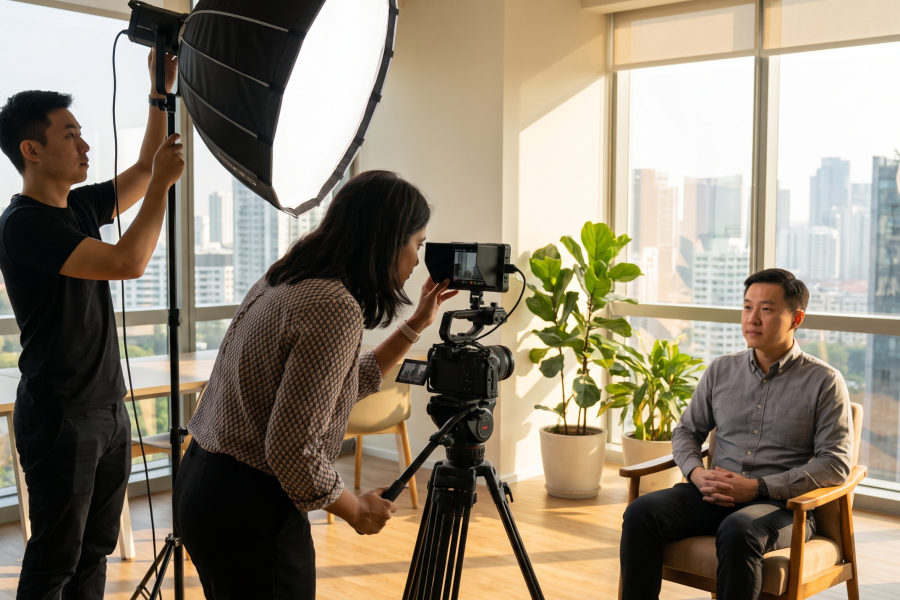
Filming eats calendar. Interviews with six people across two offices becomes a two-day shoot once you account for rigging lights in rooms never designed for them, and the people you most want on camera are precisely the ones who cannot find an hour in December.
Our video production work usually opens with a site survey for this reason, since a meeting room that looks perfectly fine to the eye can turn out to sit directly beneath an air-conditioning unit that makes clean audio impossible. Finding that out in September is a scheduling note; finding it out on the day is a lost morning.
Post-production then needs a runway of its own. Editing, a round or two of feedback, music and titles take weeks, and that timeline compresses badly when filming slips.
Settle The Talking Heads Question Early
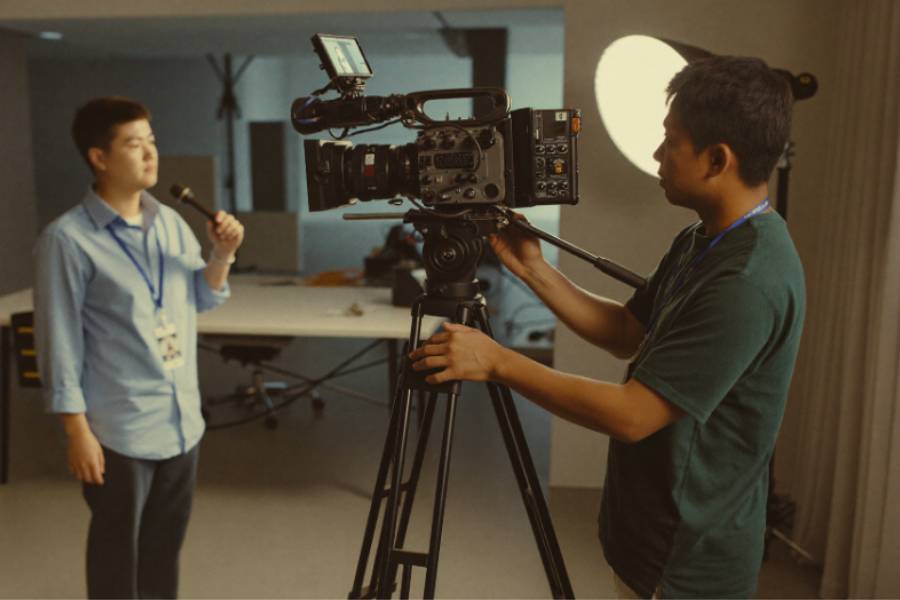
Interviews carry a film, and they are also the element most likely to derail one. If senior staff are going to speak on camera, get their agreement in September and send the questions well in advance so nobody is improvising under a light. Half an hour of preparation usually buys a far more natural answer than any amount of coaxing on the day. If they will not appear, plan a film built on observed footage and a voiceover, and stop quietly hoping somebody changes their mind in November.
Plan The Photos And The Video As One Job
Most year-end events end up needing both, and briefing them separately creates a small territorial war over floor space. A videographer wants a locked-off position and clean audio. A photographer needs to move constantly. Both need a clear view of the stage.
Sorting one run sheet for both teams avoids the moment when a tripod turns up in the middle of the group photo. Share the timings, the stage plan and the list of must-have moments with everyone at once. The same logic applies to your next annual seminar, where coverage planned as a single job consistently beats two suppliers discovering each other at the door.
Build In Time For Approvals
The stage that derails timelines is almost never the filming. It is the fortnight where a draft sits in three inboxes while everyone waits for the one person who is on leave.
Decide before filming who signs off, how many rounds of changes are included, and what happens if legal or a regional office wants a look. Two named approvers with a deadline beats a committee with none.
Consolidating feedback helps enormously. One list of timestamped notes from the whole group turns into a single edit; six separate emails turn into six, and each one costs a day.
Tell People They Are Being Filmed
Staff and guests appearing on camera should know it is happening, ideally in the invitation and again on the night. A short line in the run sheet is enough, along with a quiet way for anyone who would prefer not to appear to say so. Be especially careful with footage of children at family-friendly events, and check before anything featuring them goes out publicly.
Budget For The Version You Will Actually Use
Ask what happens to the film after the night. Highlight cuts for social media need vertical framing captured during the shoot, not cropped in afterwards, and a subtitled version is usually needed for silent autoplay.
Decide on those deliverables before filming starts, because reframing a horizontal interview into a vertical one loses the sides of the shot and generally the composition with it.
Standard corporate packages tend to centre on a highlight film with a couple of draft rounds, professional lighting and audio recording included. Extra cuts and formats are normally priced separately, so ask what is covered when you enquire, since the answer shifts with the length of the evening and the number of filming days.
Conclusion
A good year-end film gives people something to send their families and gives the company something to use for the following twelve months. Most of that difference is decided in September, not on the night itself.
If you are starting to map out your year-end plans and would like to talk through what is realistic in the time you have, Firefly Photography would be glad to help. Tell us what the evening looks like and we will suggest an approach that fits it.